Got a sleeve that looks a little too clean in the gaps.
That usually means one thing, you need smart filler not random clutter because nobody wants a sleeve that looks like a sticker sheet exploded on the arm.
The right filler can pull a whole sleeve together fast and make big pieces breathe while connecting different styles.
I have seen it turn unfinished arms into cohesive works of art, and yes I have judged a few sticker sheet sleeves in my time.
tattoo sleeve filler ideas
1. Smoke wisps
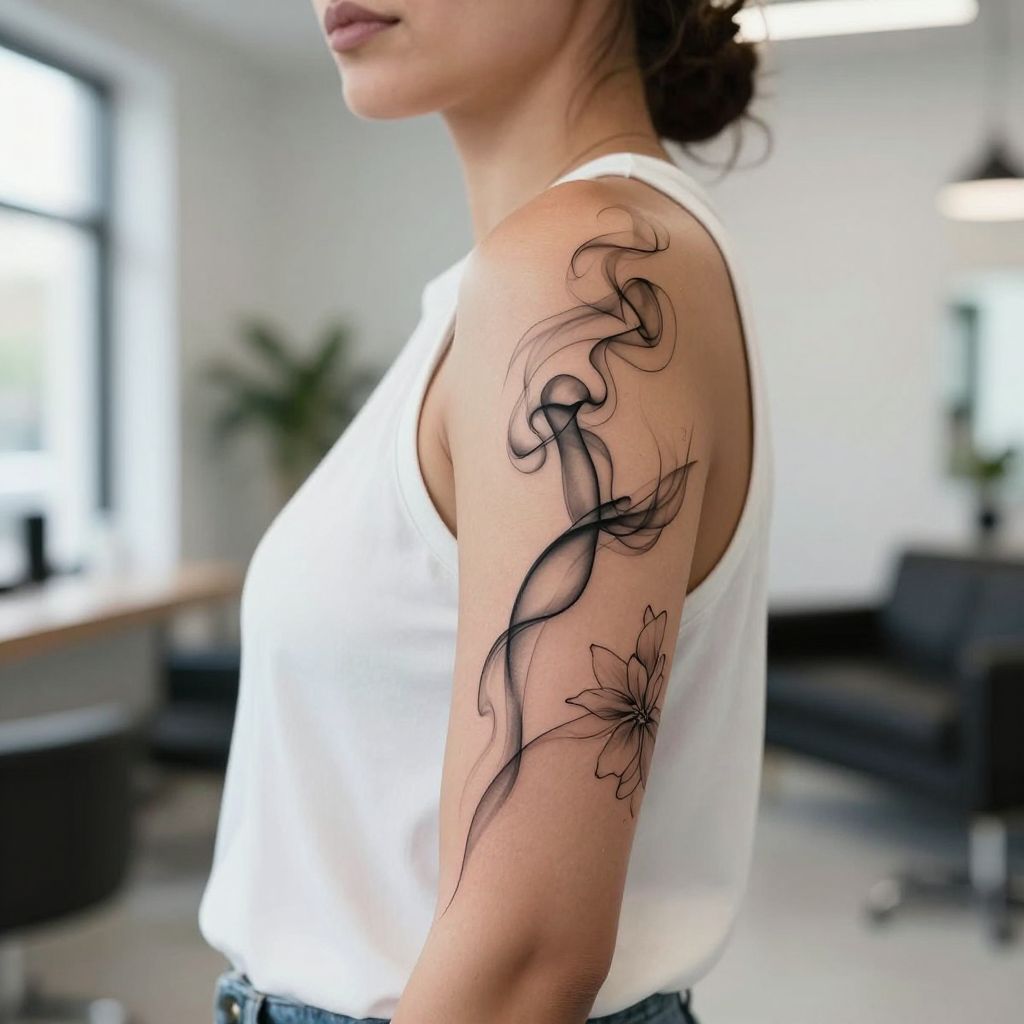
I describe smoke wisps as soft flowing tendrils of ink that bend around shapes using thin line work with smooth shading to create dreamy movement and subtle contrast while remaining mid sized and ideal for forearm or bicep placement and symbolizing change or mystery for an atmospheric visual appearance.
- Style: Thin flowing line work with soft grey shading.
- Placement: Forearm, bicep, and elbow ditch to wrap around pieces.
- Size: Mid sized networks that weave between main tattoos.
- Shading approach: Light gradient shading with soft edges for depth.
- Color palette: Black and grey with optional subtle color haze.
- Symbolism: Motion, change, and letting go.
- Customization: Artists can curl the smoke to follow portrait contours or tuck it under florals.
I find smoke filler manageable during sessions because artists can build it gradually which helps with pain and healing.
Visibility stays subtle but meaningful and the style suits people who want a softer cohesive sleeve that reads smoothly in photos and everyday life.
2. Dotwork stars
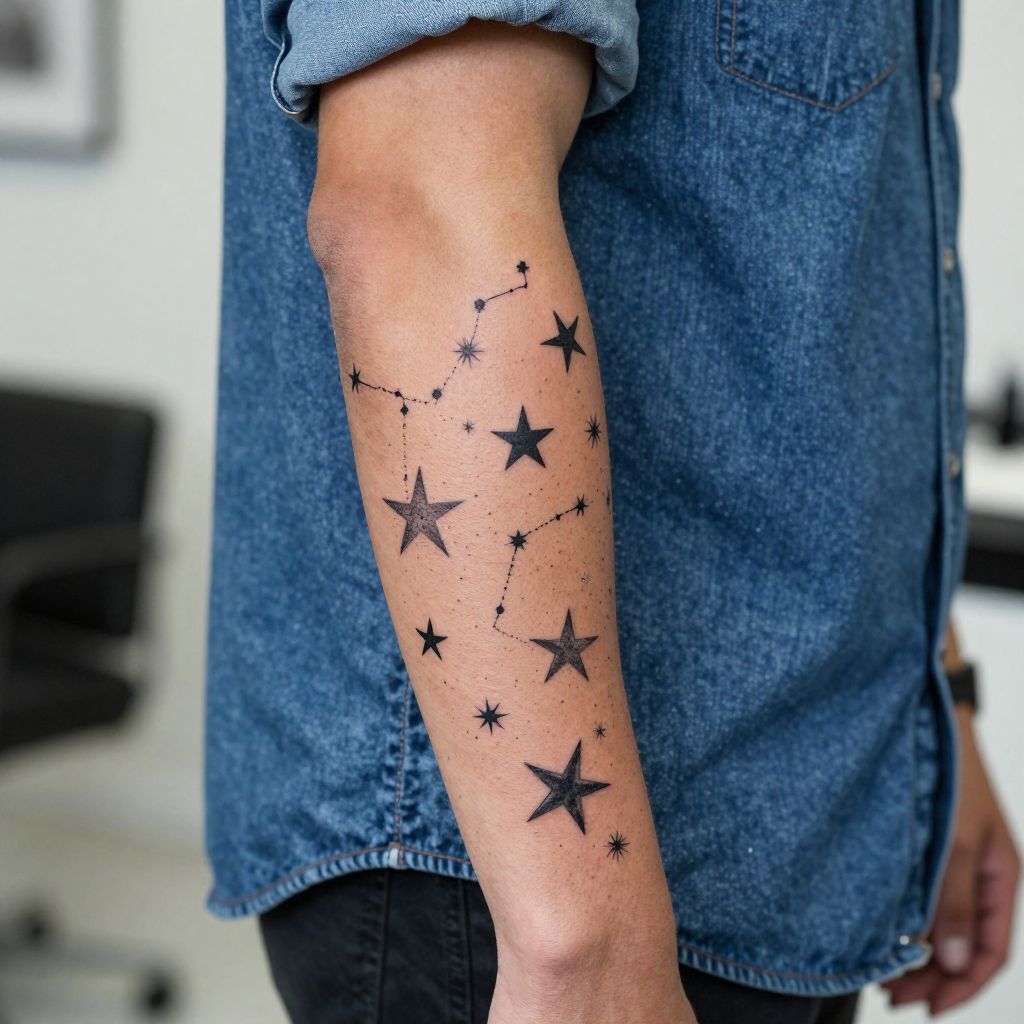
I describe dotwork stars as tiny crisp star shapes placed in clusters using fine dot shading and small line accents to create a modern celestial texture that reads clean from a distance and detailed up close while working best on outer forearm wrist and elbow areas and symbolizing guidance or ambition in a delicate visual package.
- Style: Fine dotwork with small star silhouettes and occasional shaded centers.
- Placement: Outer forearm wrist and near the elbow to break up dense sections.
- Size: Tiny to small clusters for subtle filling.
- Shading approach: Stipple shading and sparse negative space for contrast.
- Color palette: Black ink with optional white highlights.
- Symbolism: Guidance ambition and hope.
- Customization: Mix tiny constellations with single larger stars for a focal point.
I like dotwork stars because they heal clean when artists keep spacing consistent and they suit people who want a low fuss filler with clear visual impact.
Pain stays moderate and the tiny scale keeps sessions quick which helps if you do not love long appointments.
3. Tiny leaves and vines
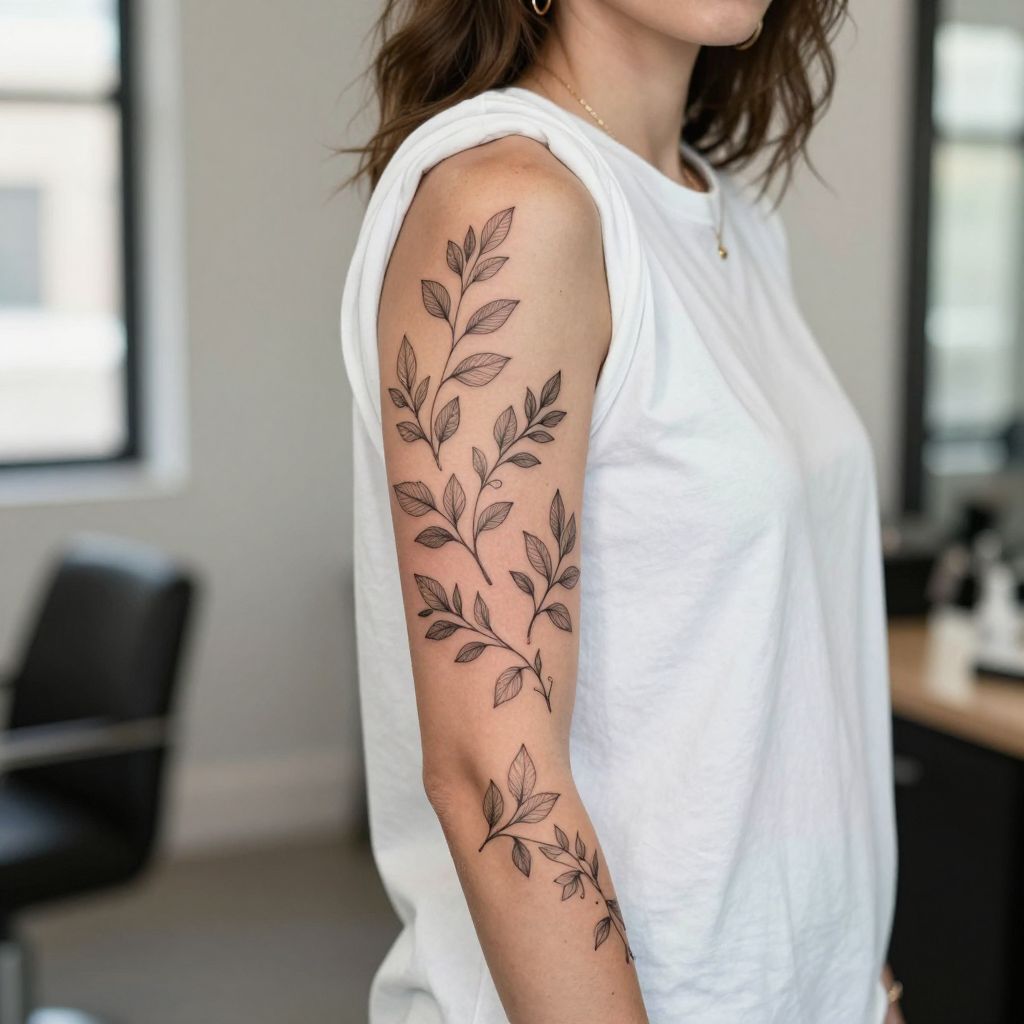
I describe tiny leaves and vines as delicate thin line botanical connectors with soft leaf shading and gentle stems that add organic flow and warmth while remaining small enough to support main pieces and fitting placements like forearm and bicep to symbolize growth and renewal with an elegant natural look.
- Style: Fine line vine work with subtle leaf shading.
- Placement: Forearm bicep and around larger florals or animals.
- Size: Small varied leaf sizes to avoid repetition.
- Shading approach: Light keyed shading and thin contour lines.
- Color palette: Black and grey or soft green accents if the sleeve uses color.
- Symbolism: Growth renewal and healing.
- Customization: Weave vines through clockwork or portraits for added meaning.
I recommend varying leaf size so the pattern looks organic and the filler stays interesting during close inspection.
This choice heals well for delicate line work and suits people who want a softer romantic vibe that blends with many sleeve styles.
4. Ornamental filigree
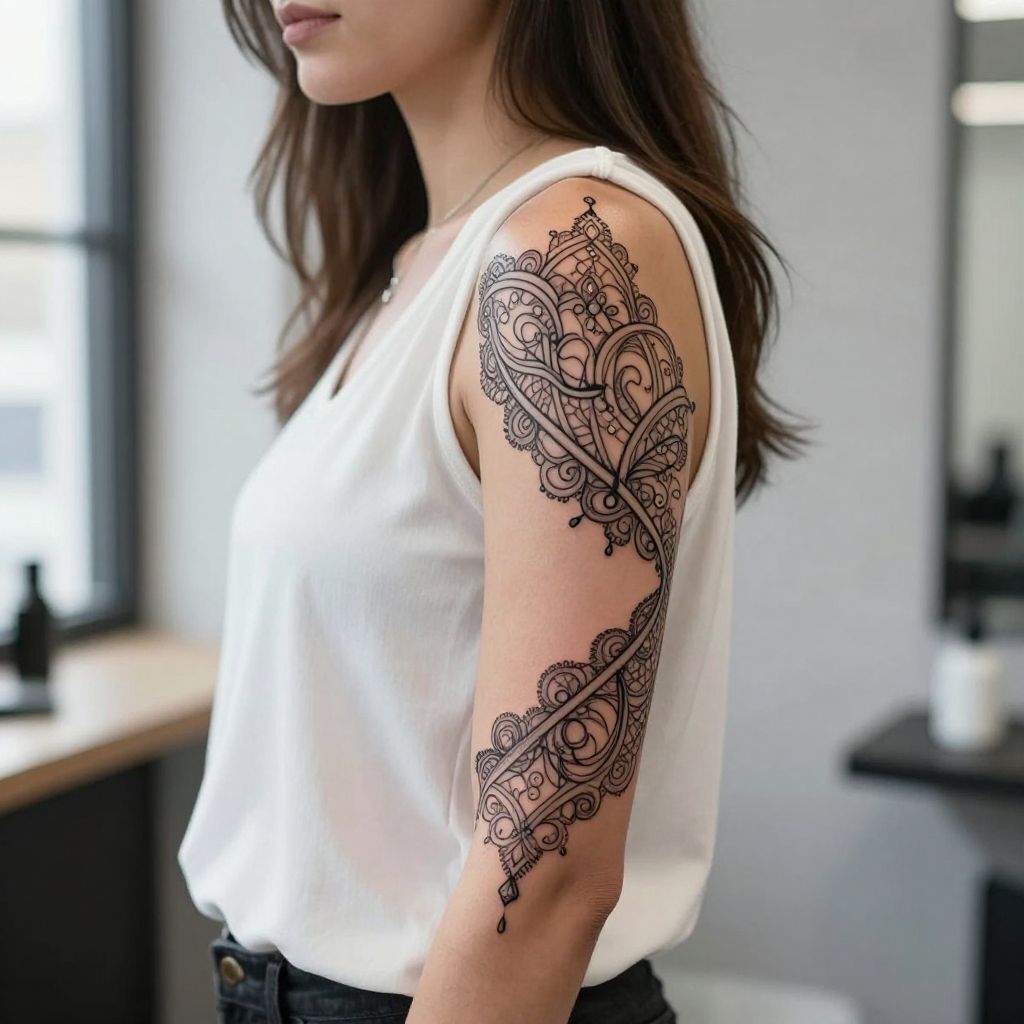
I describe ornamental filigree as elegant lace like curves and tiny curls drawn in clean line work with selective shading to frame or sit between larger pieces while remaining flexible in size and placement on the upper arm inner forearm or elbow area and symbolizing balance and decorative personal style for a polished visual finish.
- Style: Decorative filigree with precise line work and light shading.
- Placement: Upper arm inner forearm and around elbow contours.
- Size: Small to mid sized panels that act like frames.
- Shading approach: Selective soft shading to add depth without heavy saturation.
- Color palette: Black and grey for an elegant look.
- Symbolism: Beauty order and attention to detail.
- Customization: Add jewel motifs or lace patterns to match existing pieces.
I warn that ornamental filler takes patience so plan slightly longer sessions but the result feels deliberate and refined rather than slapped together.
Pick an artist with steady line work to keep spacing regular and the final look elegant.
5. Blackwork shading clouds
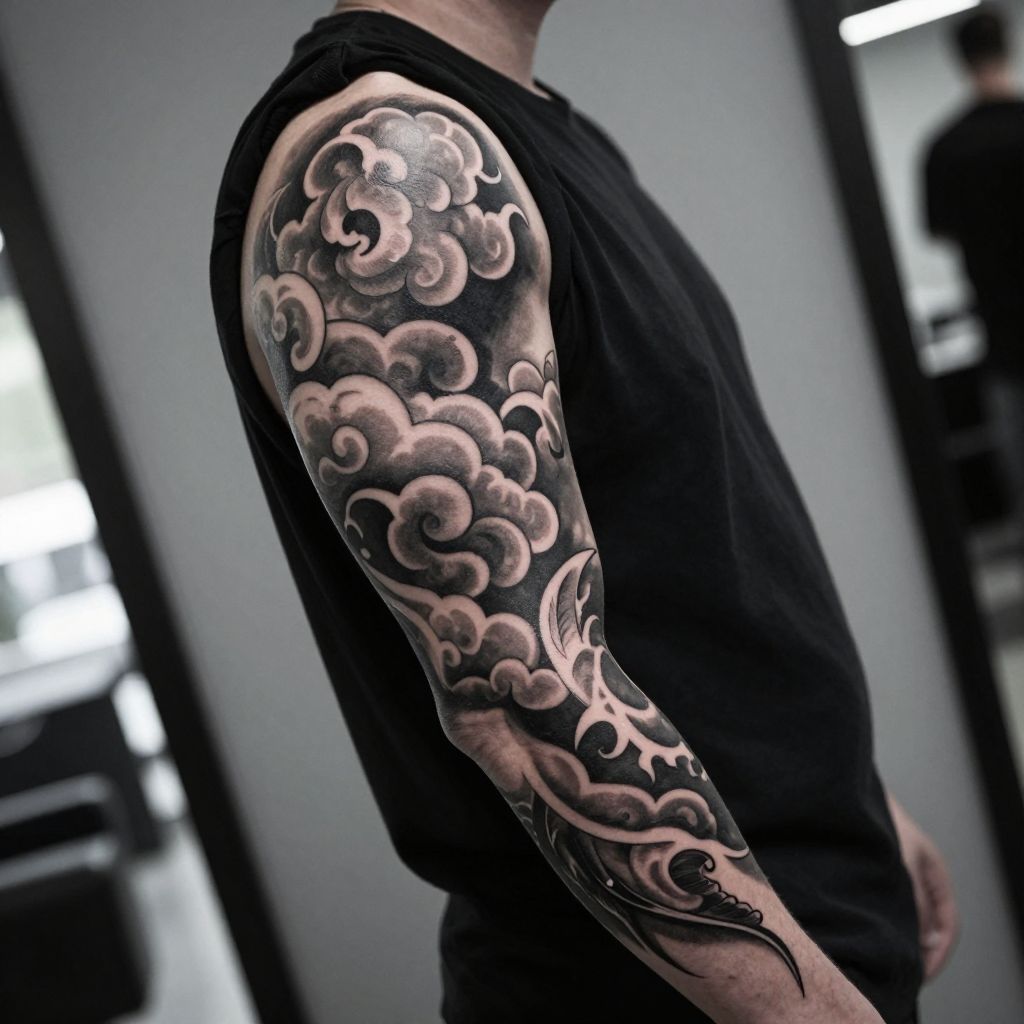
I describe blackwork shading clouds as bold dark backdrops with saturated ink and soft feathered edges that give depth to focal pieces while working best in larger areas like under biceps outer arm and around elaborate imagery to create a moody strong visual appearance and symbolize change and depth.
- Style: Dense blackwork with smooth feathered transitions.
- Placement: Under bicep around the elbow and outer arm to unify pieces.
- Size: Mid to large areas for impactful background weight.
- Shading approach: Heavy saturation with soft edge blending for depth.
- Color palette: Solid black and deep grey washes.
- Symbolism: Depth uncertainty and calm after chaos.
- Customization: Add sharper contrasts or negative space highlights for drama.
I mention that blackwork shading can feel intense on tender spots so expect stronger sensation in inner arm and elbow regions during sessions.
Aftercare and sun protection matter for dense shading to keep contrast strong over time.
6. Tiny daggers
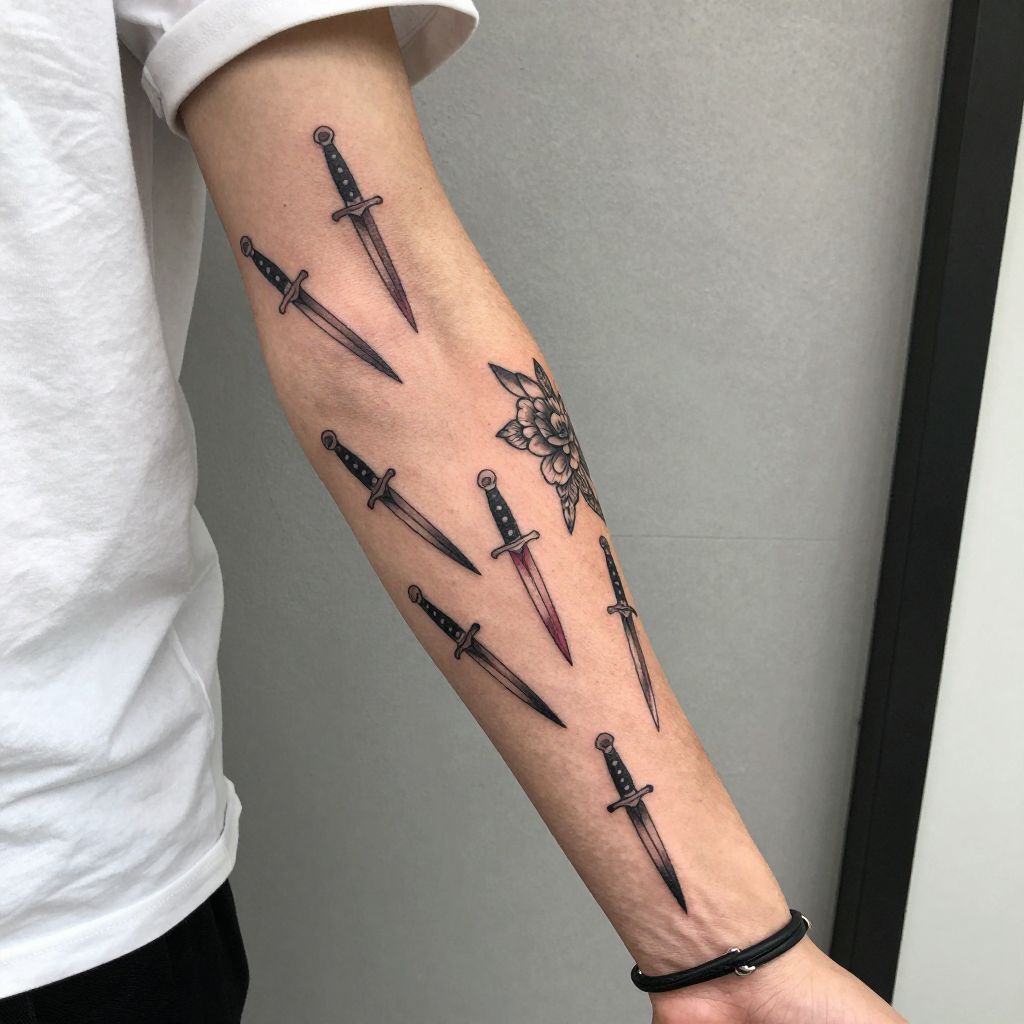
I describe tiny daggers as small clean blades with simple handles drawn in crisp line work and minimal shading that act as directional accents pointing toward main tattoos while fitting into side gaps or beside roses and snakes and symbolizing protection or sharp focus with a compact visual appearance.
- Style: Traditional clean line dagger with minimal shading.
- Placement: Side gaps forearm and near larger floral or animal pieces.
- Size: Small compact pieces to read as filler.
- Shading approach: Light grey shading on the blade with crisp outlines.
- Color palette: Black and grey with optional handle color.
- Symbolism: Protection courage and focus.
- Customization: Wrap handles with ribbon or add tiny etchings for personality.
I find daggers heal predictably because the shapes stay compact and they suit clients who like a tougher traditional vibe.
Expect some sting on inner forearm and elbow placements but short sessions help with tolerance.
7. Geometric shards
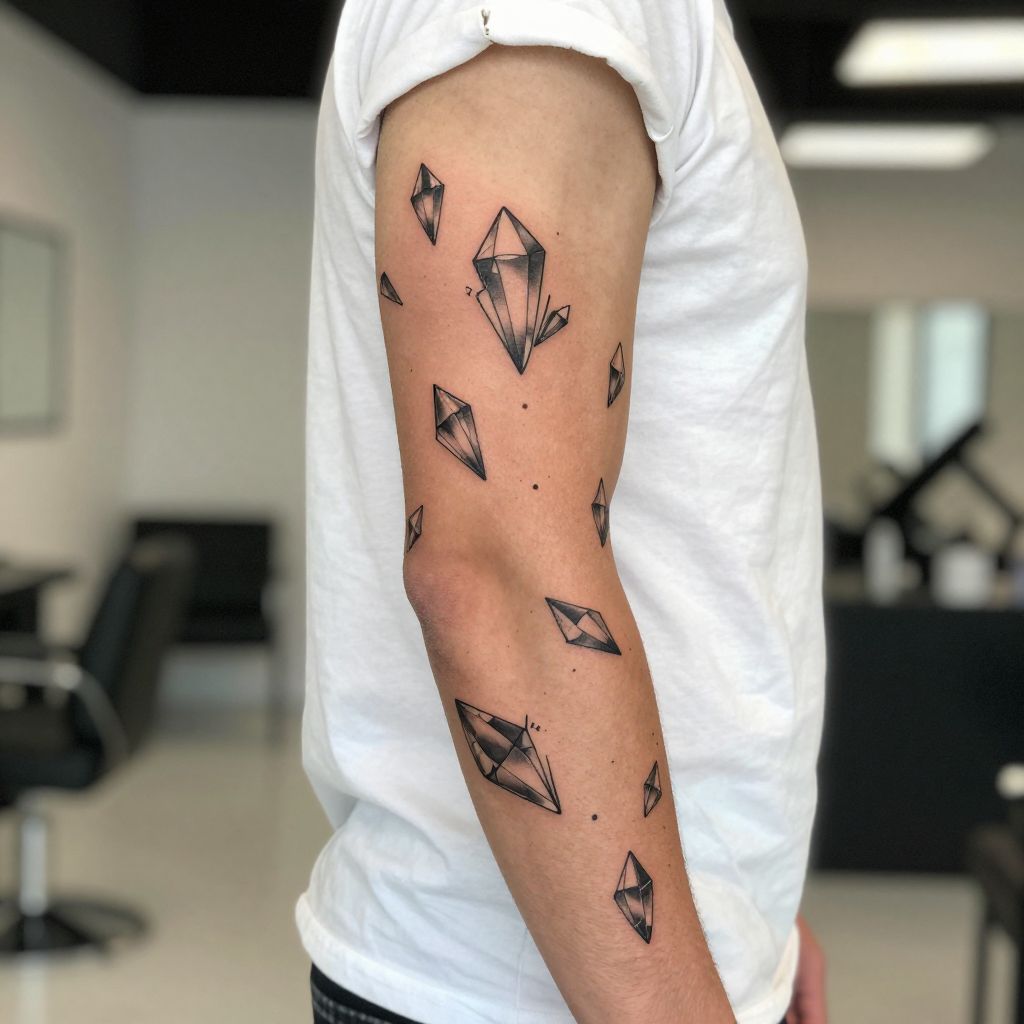
I describe geometric shards as small angular facets or fractured crystal shapes using precise line work and selective shading to create depth that frames larger pieces while working best on flatter outer arm areas and symbolizing balance and structure with a modern visual feel.
- Style: Clean geometric lines with facet like shading.
- Placement: Outer forearm and upper arm where the surface stays flat.
- Size: Small to mid sized shards that form patterns.
- Shading approach: Crisp line contrast with selective grey fills for depth.
- Color palette: Black with grey variations for dimension.
- Symbolism: Precision balance and direction.
- Customization: Combine with sacred geometry or scatter as broken patterns.
I recommend an artist with strong technical control to keep the lines crisp and stencils accurate for this style.
Geometric shards work well for people who want a modern engineered look instead of improvised filler.
8. Micro roses
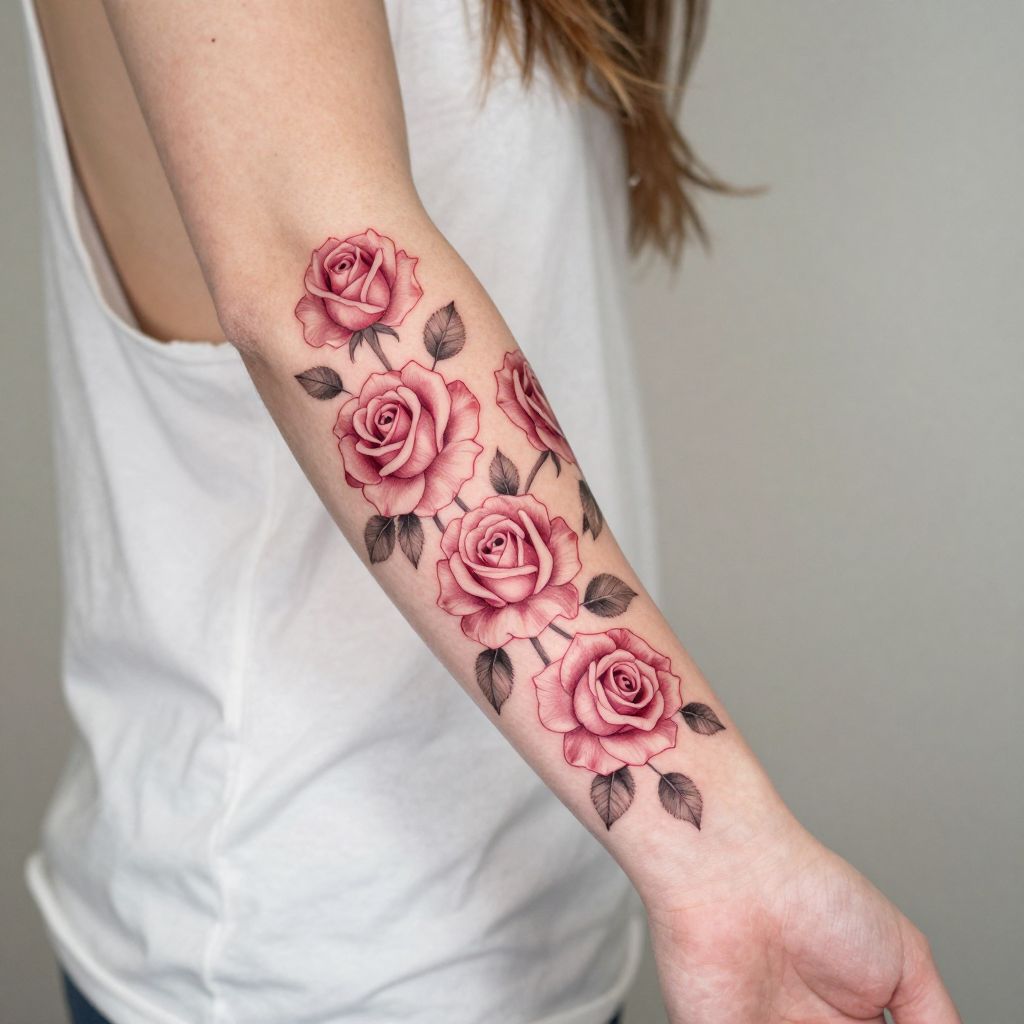
I describe micro roses as small rose heads with delicate petal line work and soft petal shading that sit between larger tattoos to add romantic rhythm while fitting wrist forearm and bicep placements and symbolizing love beauty or remembrance with a soft classic visual presence.
- Style: Fine line rose heads with subtle petal shading.
- Placement: Wrist forearm and scattered between larger elements.
- Size: Tiny to small flowers that read as connectors.
- Shading approach: Soft grey gradients inside petals for depth.
- Color palette: Red pink or black depending on boldness.
- Symbolism: Love beauty grief and devotion.
- Customization: Pair with thorns leaves or tiny buds for personal meaning.
I suggest keeping petals open and lines clean to help micro roses age better and avoid muddying small details over time.
They suit most pain levels and add familiar meaning without dominating the sleeve.
9. Bats in flight
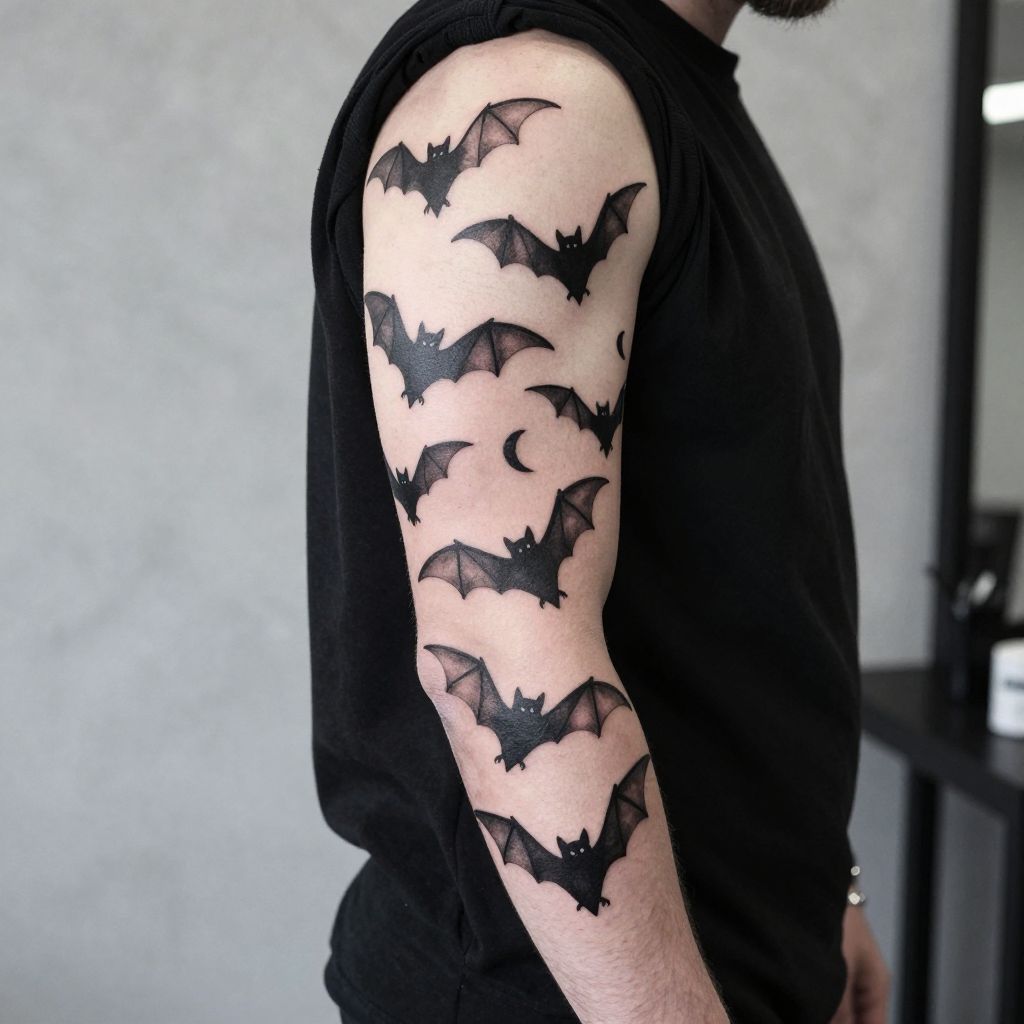
I describe bats in flight as small winged silhouettes or lightly detailed nocturnal creatures drawn with crisp outlines and optional wing shading to add motion across the arm while working well near moons skulls and blackwork pieces and symbolizing intuition transition and night energy with playful dark visual flair.
- Style: Small silhouettes or lightly shaded wings for motion.
- Placement: Outer forearm and upper arm to allow spread.
- Size: Tiny to small bats scattered in flight patterns.
- Shading approach: Minimal wing shading to keep shape legible.
- Color palette: Black and grey for a bold graphic look.
- Symbolism: Intuition transition and survival.
- Customization: Vary wing angles and sizes to avoid repetition.
I like bats because they add attitude without overwhelming other images and they heal well when artists avoid overpacking the wings.
Ask for different wing angles so the pattern reads natural rather than copied and pasted.
10. Soft waves
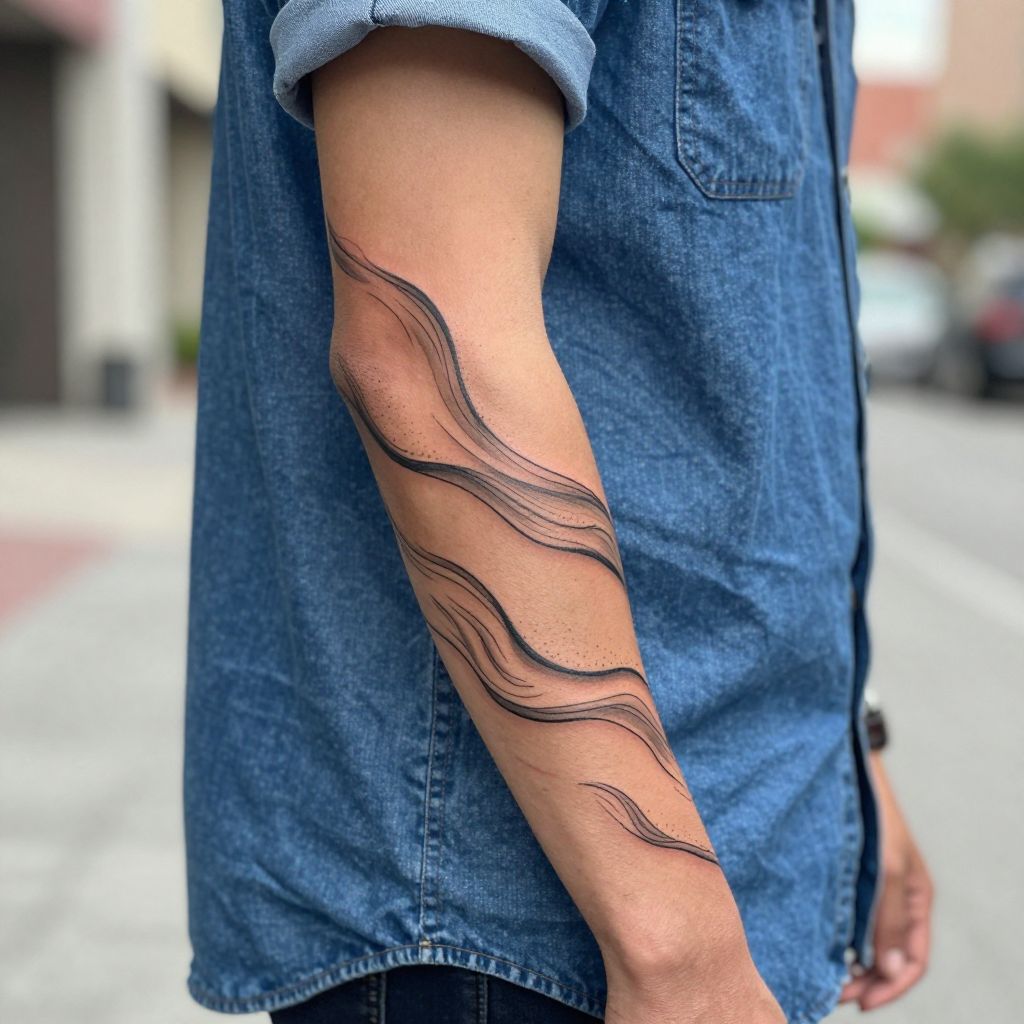
I describe soft waves as thin curved water like lines with textured foam shading and gentle flow that link sharper shapes together while fitting curved arm zones like the forearm and symbolizing resilience change and calm with a fluid visual appearance that can be subtle or slightly detailed.
- Style: Curved water lines with light texture and foam hints.
- Placement: Forearm and around curved areas for natural flow.
- Size: Small to mid sized waves that follow arm contours.
- Shading approach: Light textured shading to suggest movement.
- Color palette: Black and grey or soft blue accents if desired.
- Symbolism: Change resilience and emotional flow.
- Customization: Pair with koi shells or Japanese elements for theme unity.
I find waves calm a sleeve that has too many sharp shapes and they help the whole piece breathe with a softer rhythm.
Keep spacing loose and lines crisp so the water effect stays believable over time.
11. Tiny script words
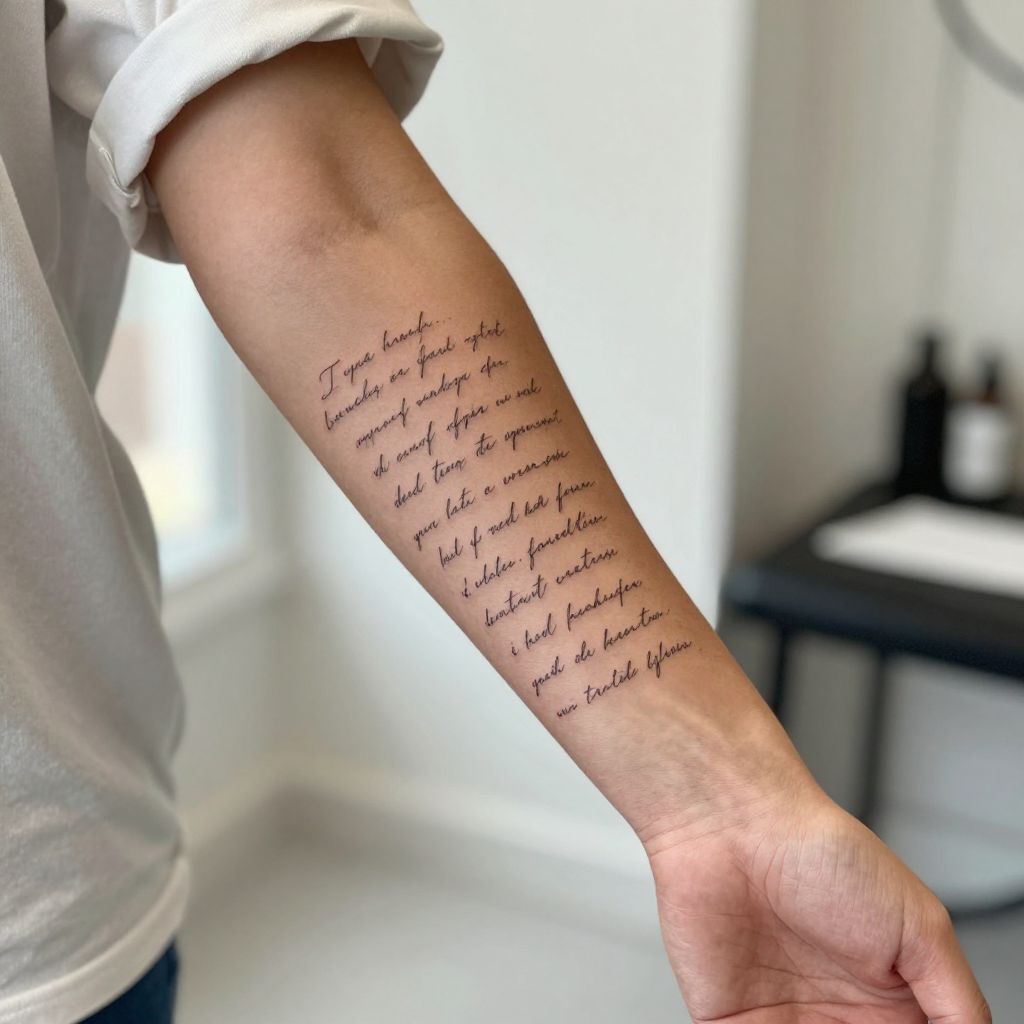
I describe tiny script words as single words or short phrases in elegant handwriting drawn with thin strokes or slightly bolder lines to match the sleeve that sit in narrow gaps near the wrist forearm or beside symbols and deliver direct meaning while adding a readable visual pulse.
- Style: Thin script or slightly bolder lettering depending on legibility needs.
- Placement: Forearm wrist and narrow gaps between larger pieces.
- Size: Small single words or very short phrases to remain subtle.
- Shading approach: Minimal to none with emphasis on clean outlines.
- Color palette: Black ink for longevity and clarity.
- Symbolism: Personal reminders names values or guiding words.
- Customization: Use a loved one handwriting sample for a deeply personal touch.
I advise choosing an artist who specializes in lettering to keep spacing readable and avoid letters blurring over time.
Script works best when the word matters to you so the filler carries emotional weight not just decoration.
12. Snakeskin texture
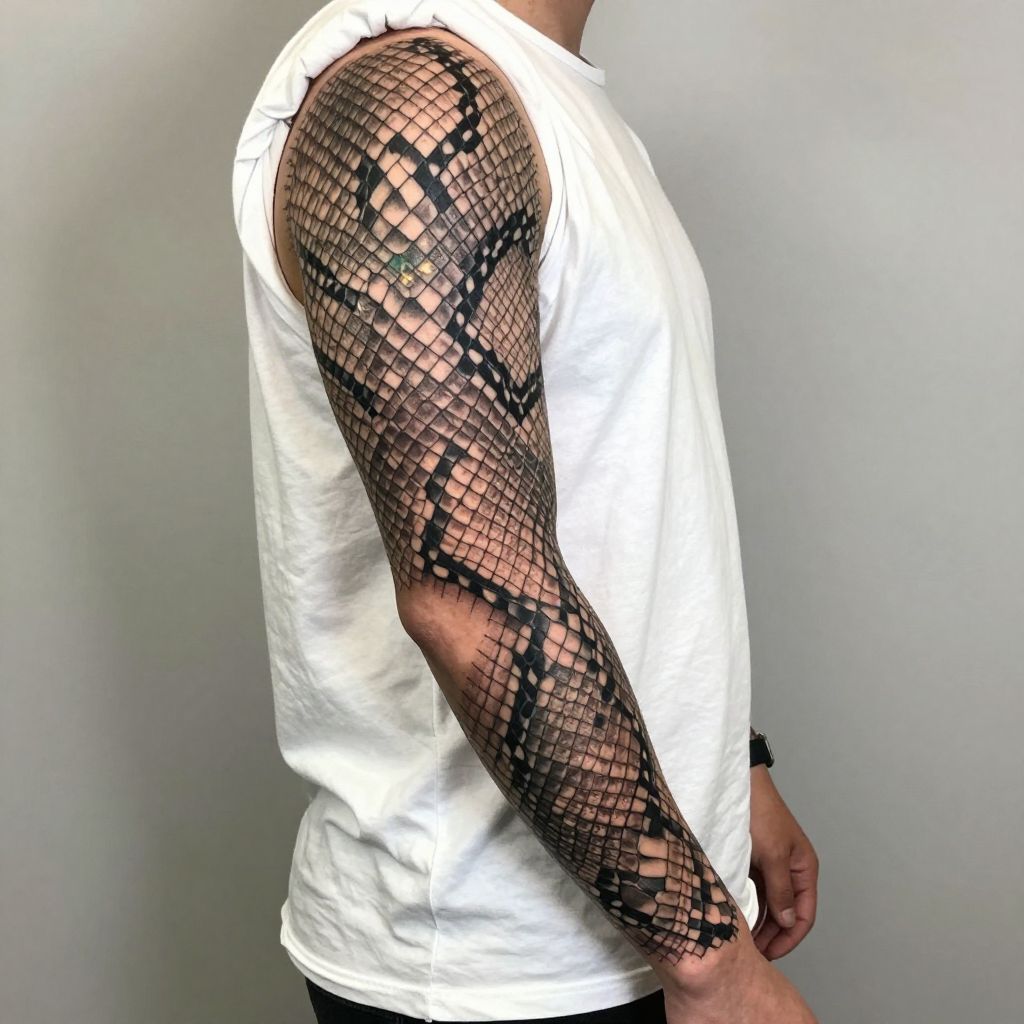
I describe snakeskin texture as repeating scaled patterns that wrap or sit behind other images using tight detailed line work or larger open scale shapes to create armor like texture while working well on forearm or outer arm placements and symbolizing transformation endurance and power with a tactile layered look.
- Style: Repeating scale patterns either tight and detailed or larger and open.
- Placement: Forearm outer arm and behind larger images for a background texture.
- Size: Pattern panels that range from small strips to broader bands.
- Shading approach: Layered grey washes for dimension and occasional highlights.
- Color palette: Black and grey or accented with green or gold tones.
- Symbolism: Transformation renewal and resilience.
- Customization: Vary scale size and direction to keep the pattern organic.
I mention that snakeskin demands precision so expect more sensation on sensitive spots and plan sessions accordingly.
Ask your artist to slightly vary scale sizes so the texture reads natural and not mechanical.
13. Tiny crowns and halos
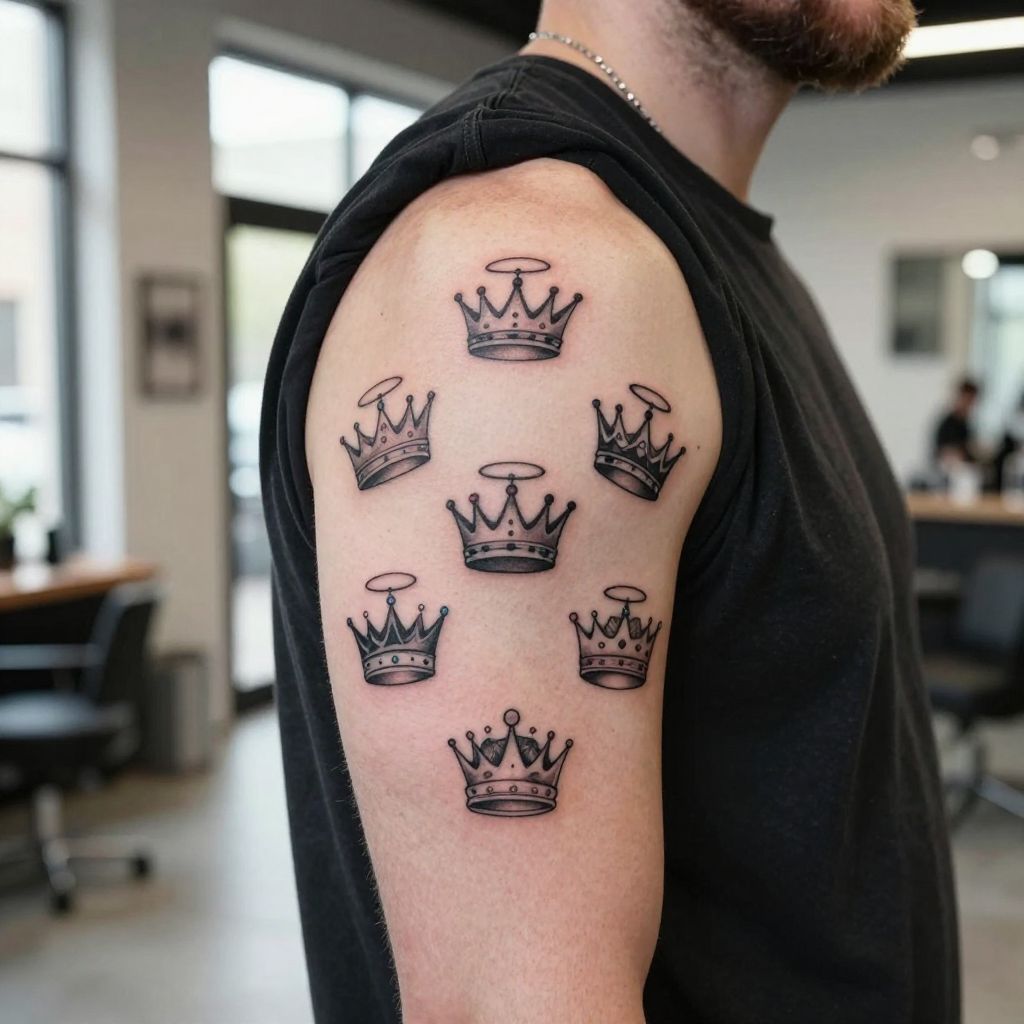
I describe tiny crowns and halos as small regal or spiritual symbols drawn with fine line details and light shading that sit above portraits animals or symbols to add intentional meaning while staying legible in moderate size placements and symbolizing power legacy or spiritual connection with an elegant visual statement.
- Style: Simple pointed crowns or delicate halos with fine detailing.
- Placement: Above portraits near symbols and in moderate gaps.
- Size: Small pieces that remain readable without crowding.
- Shading approach: Light grey shading and clean outlines for clarity.
- Color palette: Black and grey or tiny gem colors for flair.
- Symbolism: Leadership self worth and honor.
- Customization: Add tiny gems or script inside the crown for personal meaning.
I recommend matching the crown or halo style to the main sleeve so it feels intentional not random.
These designs heal well when lines stay clean and they add a touch of status without heavy ink coverage.
14. Tiny moths
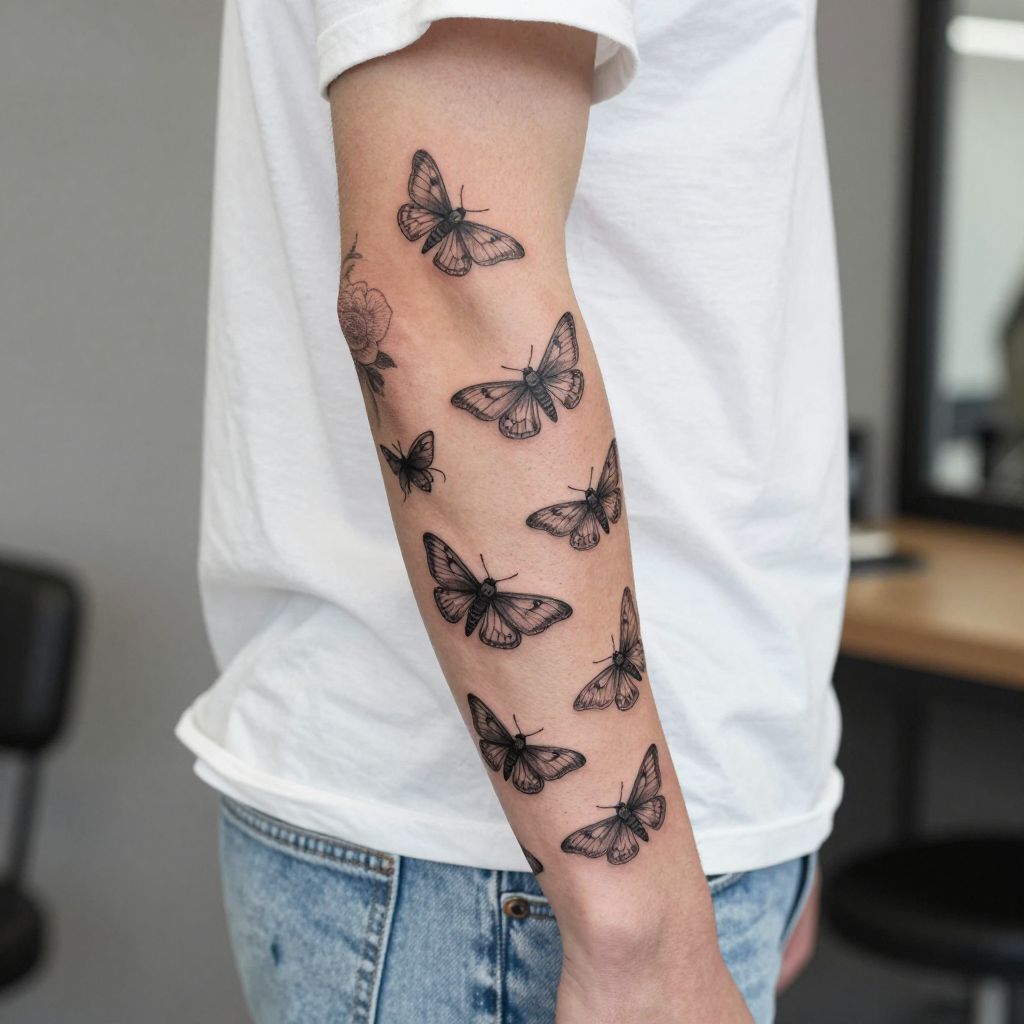
I describe tiny moths as small nocturnal insects with graceful wing shapes rendered in fine line work and dot shading that float between images to create poetic motion while fitting outer arm and forearm placements and symbolizing intuition transformation and quiet persistence with a soft gothic visual tone.
- Style: Realistic or stylized moths with wing pattern details.
- Placement: Outer arm forearm and between larger florals or moons.
- Size: Small to medium to allow wing detail without crowding.
- Shading approach: Dot shading and soft grey fills for wing texture.
- Color palette: Black and grey or subtle muted tones if desired.
- Symbolism: Attraction to light intuition and transformation.
- Customization: Add tiny eyespots or pairing moths at different angles for motion.
I like moths because they feel poetic and mysterious without needing heavy saturation to read well.
Ask for spacing that lets each moth breathe so the tiny details age more cleanly.
15. Abstract splashes
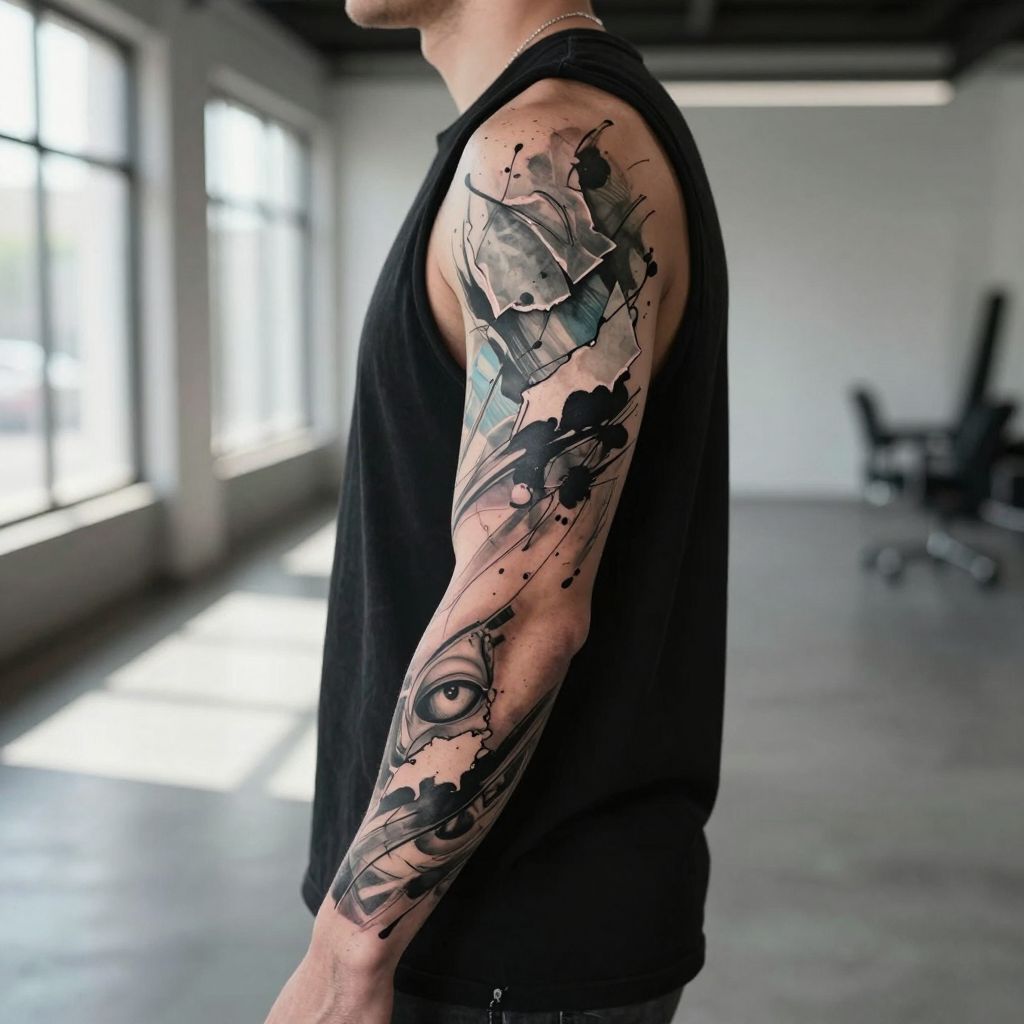
I describe abstract splashes as painterly ink marks or brush like strokes with torn paper shadows and messy motion that layer behind portraits animals or geometry to create expressive depth while fitting various arm spots and symbolizing creativity spontaneity and emotional release with a modern artistic look.
- Style: Painterly strokes and ink wash marks with organic edges.
- Placement: Variable arm spots used as background bridges between styles.
- Size: Small to broad washes depending on gap size and contrast needs.
- Shading approach: Grey wash layering and negative space to suggest movement.
- Color palette: Black and grey with optional muted color washes for expression.
- Symbolism: Creativity spontaneity and emotional release.
- Customization: Layer behind focal pieces or combine with stencil like motifs for contrast.
I advise choosing an artist with a good eye for balance because abstract marks need intentional placement to avoid looking random.
The final look depends on contrast and composition so keep the approach loose but purposeful to unite the sleeve.
Frequently Asked Questions
How do I choose the best tattoo sleeve filler ideas for my sleeve?
Start by looking at the tattoos you already have and examine the gaps between them to see what style and weight will connect pieces.
Bring reference images to your artist and ask whether the sleeve reads dark soft geometric or organic to narrow the options quickly.
Do filler tattoos hurt less than bigger sleeve tattoos?
Usually yes because small filler pieces take less time but placement still matters a lot so sensitive zones can sting more regardless of size.
Shorter sessions help with pain management and your artist can split work into chunks if you want a gentler process.
Can I mix different filler styles in one sleeve?
Yes mixing smoke dots and small florals often works better than forcing one filler type across every gap as long as the artist keeps line weight and spacing consistent.
Do you want variety or chaos, because balance makes variety feel intentional not random.
What filler ideas age best over time?
Simple shapes with strong spacing and clean line work usually age well and black ink tends to hold up nicely compared with tiny cramped details.
Ask your artist how a design will look in five to ten years and pick options that keep meaning and form as the skin changes.
Where should I place sleeve filler so it looks natural?
Focus on gaps that interrupt flow the most like outer forearm upper arm breaks and the area around the elbow for the biggest visual payoff.
Your artist should study the arm from several angles before placing filler so the design works when you move and pose.
How do I keep filler from looking like random extra ink?
Match the filler to the existing sleeve style repeat shapes and textures and avoid packing every gap full so the sleeve keeps rhythm and breathing room.
A little restraint goes a long way and it usually makes the whole sleeve read stronger.
Final Thoughts
Good tattoo sleeve filler ideas do more than cover space because they connect the sleeve story shape the flow of the arm and make older pieces look complete.
The best filler matches your taste comfort level and the art you already wear so pick options that feel like they belong on your skin.
Trust your eye talk with a skilled artist and choose filler that fits your lifestyle and healing routine so the sleeve stays strong for years.
For more inspiration visit Serious Ink Tattoos for shop information and browse outdoor tattoo ideas for related concepts and placement ideas.